All Categories
Featured
Table of Contents
Frequently reconciling bank and charge card statements makes sure that monetary records accurately show real transactions. This procedure involves comparing accounting records with bank declarations to identify discrepancies, such as missing payments or unapproved charges. Reconciliation helps avoid errors, spot scams, and guarantee that monetary reports are based on precise information.
Small company owners must track hours worked, account for benefits, and comply with labor laws and tax policies. Correct payroll management not just makes sure staff members are paid precisely and on time however also assists companies prevent legal concerns and charges associated with tax withholding errors. Financial reports offer company owners with insights into their business's financial health and performance.
Without routine monetary reporting, small companies may have a hard time to understand their monetary position and make informed strategic choices. The primary step in managing your own bookkeeping is developing a structured system for taping monetary transactions. This includes establishing classifications for income and expenses, organizing receipts and invoices, and keeping accurate records of all service deals.
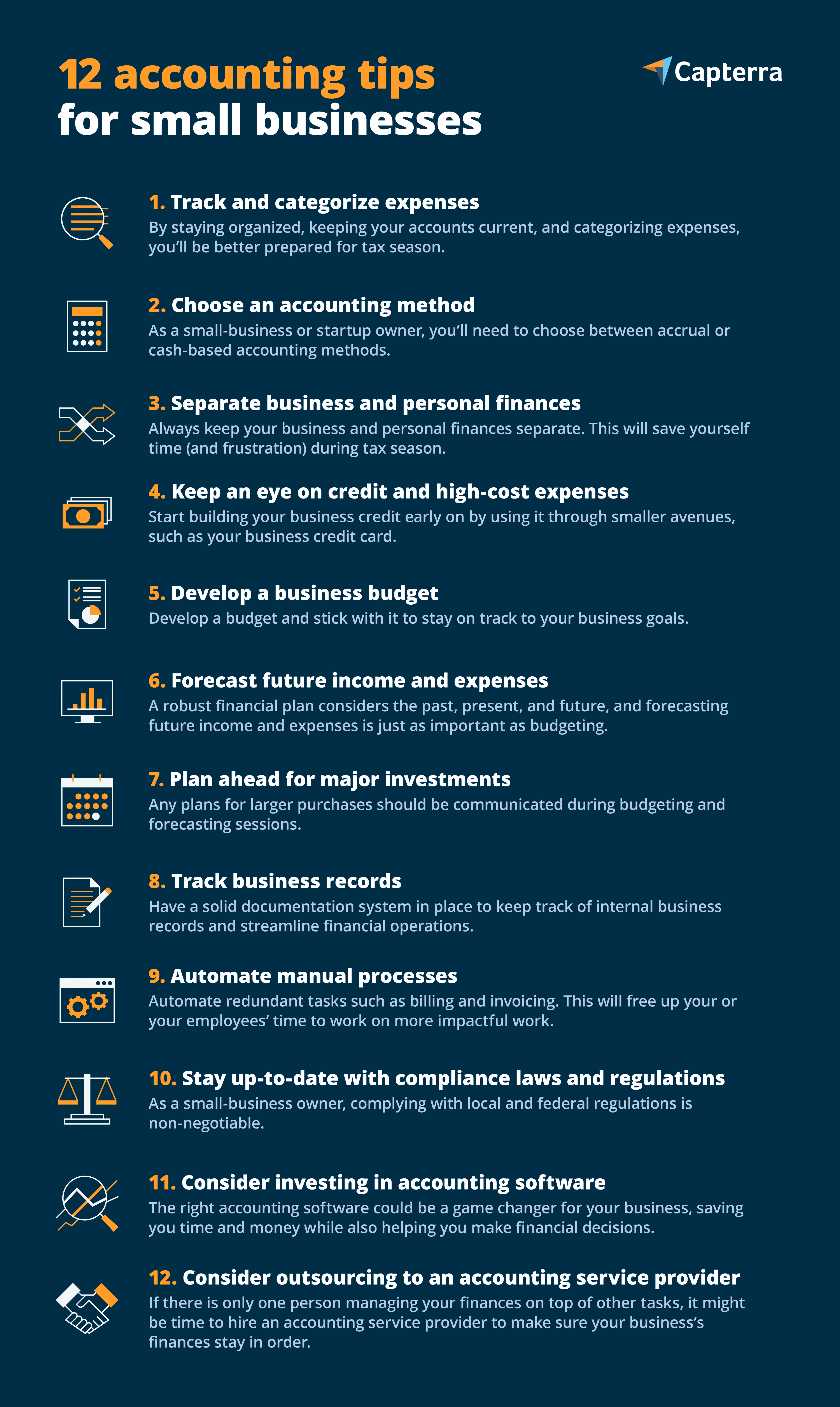
Little organization owners need to choose in between money and accrual accounting to track their finances. Cash-basis accounting records income when payments are gotten and expenditures when they are paid, making it basic and ideal for little services with straightforward transactions. Regardless of its simplicity, cash-basis accounting does not supply a precise monetary picture, given that it does not represent outstanding billings or unsettled expenditures.
The accrual method, on the other hand, records earnings when a sale is made (even if payment hasn't been gotten) and expenses when they are sustained (no matter when they are paid), supplying a more precise long-term financial image. However, it needs more accounting effort and might result in capital issues if not closely kept an eye on.
The Future of Commerce Finance: Predictive Modeling for 2026Navigating Commercial Funding Criteria in 2026
Accounting software, such as Finaloop, automates lots of bookkeeping tasks, minimizes mistakes, and creates monetary reports with ease. Brand owners should weigh aspects like company size, deal volume, and the need for automation when choosing in between spreadsheets and dedicated accounting software application. Cloud-based bookkeeping solutions enable company owners to automate monetary tasks such as transaction classification, invoicing, and bank reconciliations.
Cloud accounting likewise provides up-to-date monetary information, making it simpler to track organization performance in real-time and eliminated the need for accountants. While DIY accounting works well for numerous small business owners, there comes a time when contracting out may be more helpful. If accounting tasks become too complex, take in too much time, or cause frequent errors, working with an expert bookkeeper (or using software application specifically customized towards your organization, like Finaloop) can help.
Contracting out accounting permits company owner to focus on core operations while ensuring monetary records stay precise and certified. When trying to determine which bookkeeping software application is best for small companies in 2025, it is very important to get out of package and look for small company accounting software application besides quickbooks.
Modern Business Bookkeeping Guidelines to Drive Success
It provides an ecommerce-dedicated stock management service constructed into accounting software, a prebuilt ecommerce-focused chart of accounts, accounts receivable and payable management, automated deals classification, automated reconciliation, and tax ready books. The platform effortlessly integrates with online store platforms like Shopify or Woocommerce and markets like Amazon and Walmart.
The Future of Commerce Finance: Predictive Modeling for 2026Finaloop incorporates with your payment processors, checking account, and online stores for three-way reconciliation orders to payments to company bank accounts and uses accrual versus cash-basis versatility. Furthermore, it offers a team of internal bookkeepers and 24/7 customer assistance. Finaloop's combination of automation and professional accounting services makes it a time-saving and cost-efficient alternative for service owners who want precise, problem-free monetary management.
It supplies multi-currency support, stock management, and automatic deal matching, connects to all major accounts, and tracks costs, taxes, and revenue across sales channels to enable historical reports and forecasting. QuickBooks is software-only and not a service, indicating users need to have some accounting understanding to get the most out of it (or work with a bookkeeper).
The platform likewise has a high learning curve for novices, and its chart of accounts is not enhanced for ecommerce accounting. Xero sticks out with over 800 integrations with third-party applications. The platform uses stock management, double-entry accounting, bank reconciliation, expense tracking with classification rules, an invoices and quotes generator, and a customizable dashboard.
How Digital Inventory Management Systems Reduce Waste
It likewise supplies a convenient feature for sending out quotes, recurring invoices, and pointers. Reports are simple to view and personalize, making it a good choice for mid to large-size organizations. Like QuickBooks, Xero is accounting software application only, needing do it yourself accounting by you or a bookkeeper. App integrations cost an extra charge depending on the platform added.

Latest Posts
Why Inventory Precision Cuts Store Overhead
Storefront Automation: Improving Efficiency for Growth
7 Simple Tips for Running a Profitable Storefront